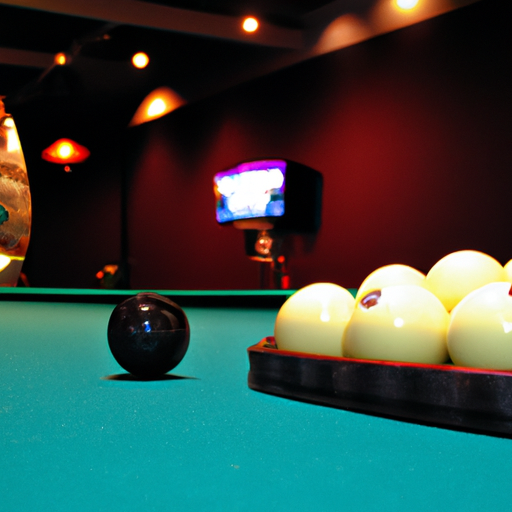
When was pool first created? The origins of pool can be traced back to the 15th century in Europe, where it evolved from a lawn game called croquet. Initially played with wooden sticks and balls on a grassy surface, pool eventually transitioned indoors and gained popularity among nobility.
The Origins of Pool: Tracing the Birth of a Classic Sport
The Origins of Pool: Tracing the Birth of a Classic Sport
The early history of pool, billiards, and snooker is a fascinating journey that dates back centuries. While the exact origins of these cue sports are debated, there are some key milestones that provide insights into their evolution.
One of the earliest known predecessors of these games can be traced back to ancient Egypt, where evidence suggests that a stick and ball game similar to modern-day pool was played. However, it wasn’t until the 15th century in Europe that the game began to take shape as we know it today.
During the medieval period, a lawn game called “jeu de mail” was popular in France. This game involved hitting balls with a wooden cue through hoops or arches embedded in the ground. Over time, this evolved into a table-based version, where players would use a mace-like stick to strike balls on a table.
As cue sports gained popularity across Europe, various versions of the game began to emerge. In England, a game called “pall-mall” became popular during the 16th and 17th centuries. This game incorporated elements of croquet and golf, and it was played on a long alley using a wooden mallet to strike a ball.
The term “billiard” is believed to have originated from the French word “billart,” which means “mace.” This refers to the club-like instrument that was used to strike the balls in early versions of the game. Billiards started to gain prominence during the 18th century, particularly in England, where indoor tables were becoming more common.
It was during the 19th century that the game of “pool” began to take shape. The term “pool” referred to the act of betting or pooling money, as players would contribute to a collective pot before a match. This form of gambling became increasingly popular, leading to the rise of dedicated pool halls and the standardization of rules.
Snooker, a cue sport that originated in India, has a more recent history. It was created by British Army officers stationed in the country during the 19th century. The officers devised a variation of billiards with additional colored balls, creating a more complex game that required strategic planning and precise shot execution.
In conclusion, the origins of pool, billiards, and snooker can be traced back to ancient games and evolved over centuries through various cultural influences. Today, these cue sports continue to captivate players and fans worldwide, offering both recreational and competitive opportunities.
Early Origins of Pool
The origins of pool can be traced back to various cue sports that were played in different parts of the world. One of the earliest known predecessors of pool is a game called “billiards,” which was played in France as early as the 15th century. This game involved striking balls with a stick or mace on a grass-covered table.
Over time, variations of billiards emerged in different countries. In England, a game known as “English billiards” gained popularity in the 18th century. It was played on a table with three balls: a red, a white, and a yellow. The objective was to score points by potting the balls into pockets.
Fun fact: The term “pool” initially referred to a collective betting system in horse racing, where participants would place their bets into a common pool, hence the name later being applied to cue sports.
Development of Modern Pool
The modern version of pool, as we know it today, started taking shape in the early 19th century in America. As the game gained popularity, new variations and rules were introduced. One of the key developments was the introduction of the leather cue tip, which allowed for better control and spin on the balls.
In 1878, the first standardized set of rules for pool, known as the “The Billiard Congress of America (BCA) Rules,” was established. This helped to unify the game and provide a consistent framework for players.
Did you know? The game of pool became especially popular during the American Civil War, as it provided soldiers with a form of relaxation and entertainment during their downtime.
Global Expansion and Evolution
Pool continued to spread globally during the 20th century, with different variations gaining popularity in different regions. In the United Kingdom, snooker emerged as a popular cue sport in the late 19th century. Snooker is played on a larger table with 21 colored balls and has its own set of rules.
Today, pool, billiards, and snooker are enjoyed by millions of people worldwide, both as recreational activities and as competitive sports. The games have evolved significantly over the years, with advancements in equipment, techniques, and organized tournaments.
Fun fact: Pool was included as an official sport in the Pan American Games in 1995, further solidifying its status as a globally recognized sport.
FAQ
What are the origins of pool?
Pool is believed to have originated from a French outdoor game called “jeu de paume” in the 15th century. This game involved using a stick to hit balls across a table-like surface. Over time, it evolved into an indoor game known as “billiards.” The term “pool” came into use in the 19th century, referring to a collective betting of wagers by players. Today, pool refers to various cue sports played on a pocketed table with numbered balls.
Who is credited with inventing pool?
Modern pool as we know it today was not invented by a single person. Its origins can be traced back to various games played on billiard tables in Europe during the 15th and 16th centuries. However, it was in the United States that pool became immensely popular, with the game evolving and gaining standardized rules.
How has the game of pool evolved over time?
The game of pool has evolved significantly over time. Originally played on outdoor tables in the 15th century, it moved indoors in the 19th century as the sport gained popularity. The introduction of cushioned rails in the early 1800s allowed for more strategic gameplay and the development of various trick shots. In the mid-20th century, the game experienced a surge in popularity with the advent of televised tournaments, leading to the formation of professional leagues and organizations. With advancements in technology, pool tables have become more sophisticated, featuring automatic ball returns and electronic scoring systems. Today, pool continues to evolve as players experiment with new techniques and strategies to enhance their gameplay experience.
In conclusion, the origins of pool can be traced back to the early 15th century when it first emerged as a popular game in Europe. Although its precise beginnings remain somewhat elusive, historical evidence suggests that it evolved from a lawn game called croquet. Over the years, the game underwent various transformations and rule modifications, eventually solidifying into the pool we know today. While it has certainly come a long way since its humble beginnings, pool continues to captivate players and enthusiasts worldwide, with countless individuals enjoying the strategic and competitive nature of this beloved sport.