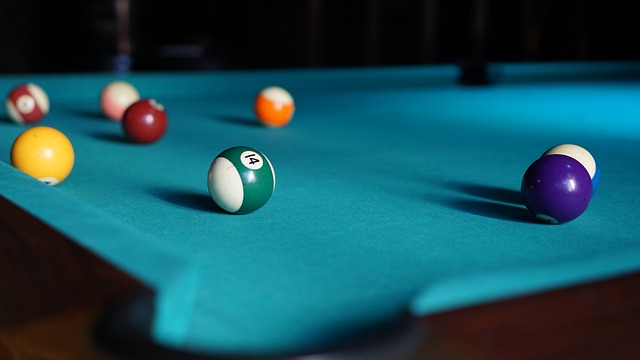
Welcome to Pool and Billiard Cues, where we explore the fascinating world of cue sports! In this article, we’ll uncover another name for pool balls and delve into the history and significance behind these colorful spheres that are central to the game.
The Various Names and Terminology for Pool Balls in Cue Sports
In the world of cue sports, terminology can vary significantly between different games, such as pool, billiards, and snooker. Each game features its own unique set of balls, and these balls may be referred to by various names depending on the context or region.
In pool, players typically use a set of 15 object balls numbered 1 through 15, along with a cue ball. The terms for these balls can include solids (numbers 1-7) and stripes (numbers 9-15). The eight-ball, which is black, holds a special significance as it is often the game’s objective.
In contrast, billiards, particularly in the game of carom billiards, uses only three balls: a white cue ball, a yellow cue ball, and a red object ball. The ability to score points by hitting these balls in specific sequences introduces specialized terminology like carom and rail.
For snooker, the setup is quite different. Snooker uses 21 balls: 15 red balls, 6 colored balls (yellow, green, brown, blue, pink, and black), and the cue ball. Terms such as potting, which refers to sinking a ball into a pocket, and break, which signifies a player’s initial scoring shot, are commonly used in this context. Moreover, the distinction between full points (for potting colored balls) and frame (the overall game) adds layers to the terminology.
Overall, understanding the various names and terminologies for the balls in pool, billiards, and snooker enhances one’s appreciation and skill in these cue sports. Each term reflects the game’s rules, scoring systems, and strategies unique to each sport.
Understanding the Terminology: Pool Balls vs. Billiard Balls
The terms “pool balls” and “billiard balls” are often used interchangeably, but they refer to different contexts within cue sports. Pool balls are generally designed for games played on a table with pockets, like eight-ball and nine-ball. These balls are typically larger and come in sets that include a specific number of colored balls, along with a cue ball. On the other hand, billiard balls are used in games like straight rail or three-cushion billiards, which are played on pocketless tables. The balls used in these games are usually slightly smaller and more uniform in size and design. Understanding this distinction is vital for enthusiasts to appreciate the nuances of each game.
The Evolution of Pool Balls: From Ivory to Modern Materials
Historically, pool balls were made from ivory, sourced from the tusks of elephants, which was prized for its durability and smoothness. However, due to ethical concerns and the depletion of elephant populations, manufacturers transitioned to synthetic materials. Today, most pool balls are made from phenolic resin, which offers superior durability and performance. These modern materials provide a consistent playing experience and improved resilience against chipping and cracking. Ultimately, the evolution of pool balls reflects advancements in technology and a commitment to environment-friendly practices.
Different Types of Pool Balls and Their Designations
Pool balls come in various designs, each tailored for specific games, which can affect gameplay and aesthetics. The most common type is the standard set, consisting of 15 object balls numbered 1 to 15 and one cue ball. Approximately half of these balls are typically solid colors, while the others are striped. In addition to the standard set, there are also specialty balls used in games like cue sports tournaments and three-cushion billiards. Furthermore, some players prefer customized balls that feature unique designs or colors for personal flair. Understanding the different types of pool balls can enhance a player’s enjoyment and strategy during play.
FAQ
What is another name for pool balls in the context of billiards?
Another name for pool balls in the context of billiards is cue balls and object balls.
Are there any regional variations for naming pool balls?
Yes, there are regional variations in naming pool balls. In the United States, the standardized set includes colors and numbers like stripes and solids, while in the UK, the emphasis might be on different game variations like snooker, where the balls are numbered differently. Additionally, some regions refer to certain balls by their color alone rather than their number.
Do different types of billiard games use distinct names for pool balls?
Yes, different types of billiard games use distinct names for pool balls. For instance, in pool, the balls are often referred to as “stripes” and “solids,” while in snooker, they are known as colored balls and the cue ball. Each game has its own set of rules and terminologies that define the use of these balls.
In conclusion, understanding the terminology related to pool balls is essential for both players and enthusiasts. While commonly referred to as “pool balls,” these spherical objects can also be known by various other names depending on the context, such as “billiard balls” or “snooker balls.” This nomenclature not only reflects the game being played but also enhances the overall experience and knowledge of the sport. Whether you’re a casual player or an aspiring professional, familiarizing yourself with these terms enriches your appreciation for the game. Ultimately, mastering the nuances of pool, billiards, and snooker terminology allows for a deeper connection with this timeless pastime.